







Café en Général
Écrit par :

Typhoon Éditorial
Passionnés de torréfaction
Les grains de café proviennent de deux familles de plantes : le robusta et l'arabica. Poussant à des altitudes plus basses, le premier café peut se développer en de nombreux endroits. Tandis que l'arabica vient d'environnements spécifiques, sa contrepartie est résistante. Dans des conditions de vie fragiles, l'arabica devient acide et produit moins de caféine.
Robusta beans go a lot farther: doubled caffeine content but halved amounts of sugars impact our bodies differently. A strong cup does not need as much. So, it’s often used in blends of cheaper combinations like everyday store bought coffee. The taste is not so celebrated, consisting of harsh and even bitter flavors. It’s put into instant coffee, mixed espresso, and dark roasts.
But, the same factors that make Robusta beans less flavorful lower blood pressure and heighten metabolism. Some reconsider its underrated health benefits.
ㅤ
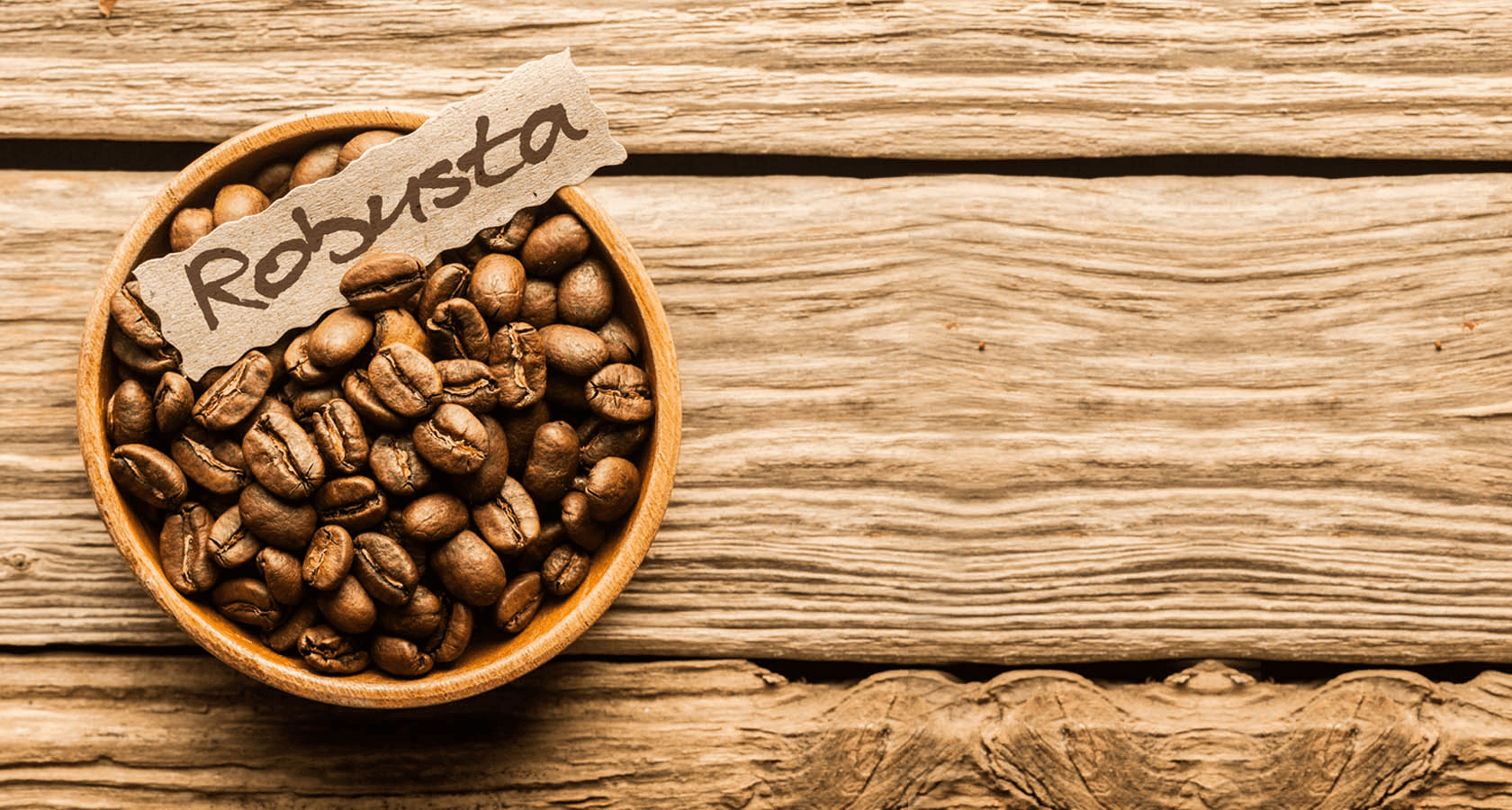
The robusta plant comes from the Rubiaceae family, or in layman’s terms madder plants. Because we only drink this coffee out of the whole family, it is simplified to coffea robusta, officially coffea canephora. Wild plants have bright red berries. Cultivated ones are a bit larger, but its coffee beans are smaller than Arabica and rounded with a line splitting it.
Robusta coffee plants are grown with lower cost and fewer pesticides. These are easier to produce in larger amounts, crops yield well and save money. Other environmental factors benefit too. Because the beans mean more caffeine, blends with arabica are hailed as an in-between environmentally-friendly consumption.
ㅤ
Robusta coffee beans versus arabica are an underrated type for coffee-lovers to explore. As we grow with the world of coffee, these new types of drinks create a fine way to develop our favorite classic cup of joe!